About Me
Mason "Speedy Mac" Coverstone
Audio engineer, Nashville-raised, and usually somewhere near a soundboard or a workbench.
I started in school theater, where I took on technical lead work for productions and helped put together our student music festival, Zeitgeist.
That work meant building sets, hanging lights, setting up sound, and figuring things out with the people around me. It led me to recording at Omega Studios, live sound at Blues Alley, and AV work at The Watergate Hotel. I still like the hands-on part: listening, tracing a problem, and getting a setup working for the people using it.
Work With Me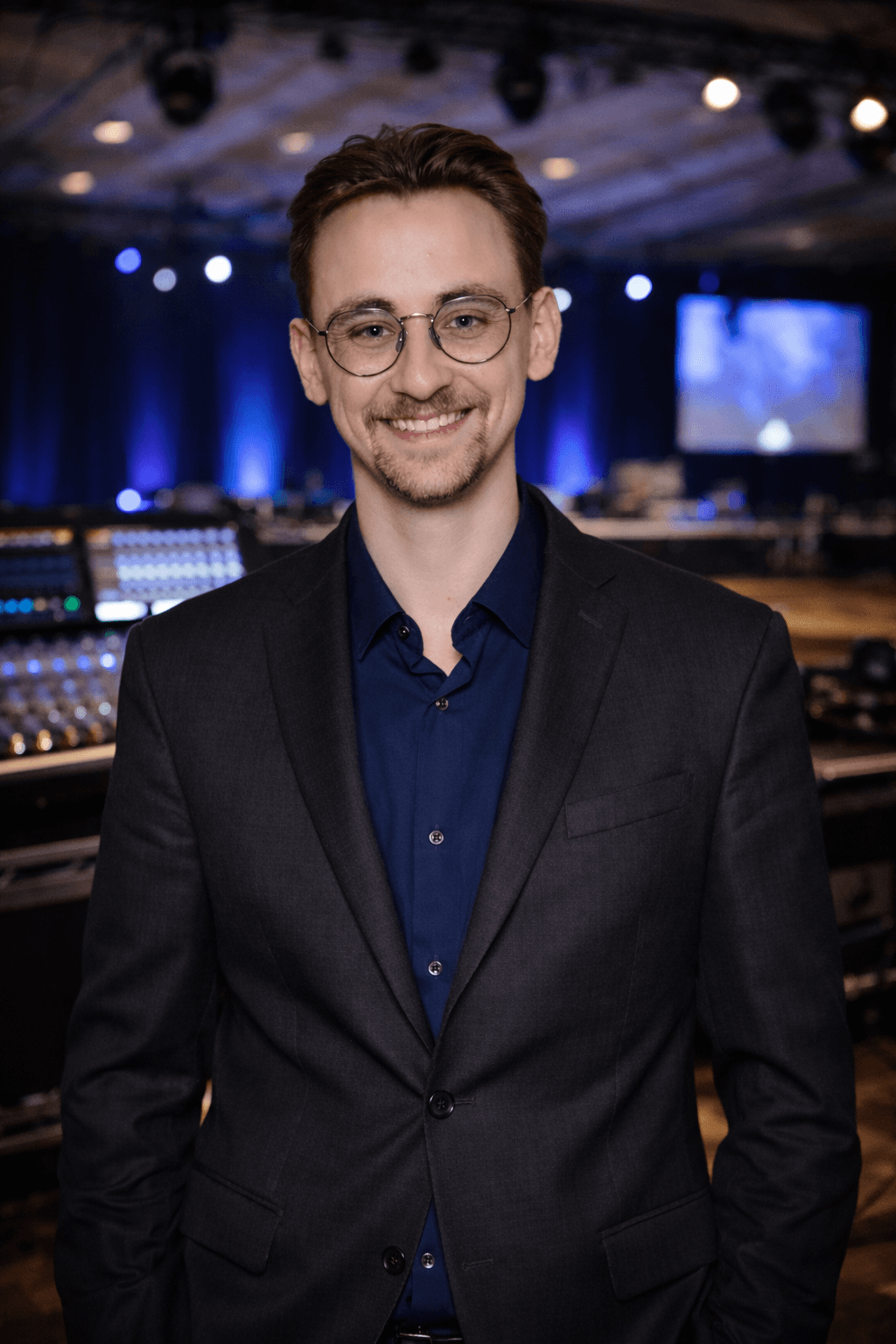
200+
Shows Mixed
15+
Venues Worked
10+
Years in Production
50+
Clients Worked With
My Philosophy
I mix like a window washer, not a painter
I want you to hear the performance. That starts with listening to the musicians, making sure they can hear what they need, and getting the basics right before reaching for more processing.
My Journey
How I Got Here
Open a chapter to read more about the work and the people along the way.
Curious about signal flow? Try tracing it here.
2014
School Theater
Building sets, hanging lights, and taking on technical lead work for school productions.
School Theater
Building sets, hanging lights, and taking on technical lead work for school productions.
I grew up in Bellevue, outside Nashville. At school, I found myself drawn to the technical side of theater: the sets, lights, cables, and soundboard.
I took on technical lead work for productions including The Theory of Relativity. For that show, we had to build oval risers larger than a standard sheet of plywood. You could draw the shape you wanted, but then you had to figure out how to make it with the material you actually had.
There were plenty of other productions and plenty of different jobs to do. Building scenery, hanging lights, and working on sound gave me a place to learn by doing, alongside other students.
2018–19
Zeitgeist: A Student-Run Festival
A scrappy high-school music festival, put together by students.
Zeitgeist: A Student-Run Festival
A scrappy high-school music festival, put together by students.
Zeitgeist was our high-school music festival. It was scrappy, student-run, and a lot of work to put together.
We hung lights, set up sound, worked out the schedule, and helped people get onstage. Some performers were doing this for the first time, and we were learning plenty ourselves.
I liked having to work things out with the other students, using the gear and time we had. Setup, soundcheck, the show, and packing it all away gave me a much clearer idea of what goes into a live event.
2020
A Pause in Live Shows
Zeitgeist was canceled, and I found other things to work on.
A Pause in Live Shows
Zeitgeist was canceled, and I found other things to work on.
Zeitgeist 2020 was canceled when COVID shut down live events. Classes moved online, and the hands-on work I had been doing at school stopped.
I worked at a bowling alley, eventually moving from customer service into fixing pinsetters. It was a different kind of equipment, but I still spent my time figuring out why something was not working and how to get it going again.
Helping guitarist Matt Rodriguez with rehearsals brought me back to a soundboard. I wanted to spend more of my time doing that kind of work, so I started looking for a way into audio professionally.
2022
Omega Studios
Studying audio and getting more time in the studio.
Omega Studios
Studying audio and getting more time in the studio.
At Omega Studios, I studied audio and worked on recording sessions for musicians, bands, and voiceover artists. I had time to connect what I was hearing with what was happening in the signal path.
Recording, editing, and mixing all mattered, but I kept coming back to the beginning of the process: the source, the microphone, its placement, and the recording level. Getting those right makes the rest of the session easier.
That is still how I approach a recording. I would rather take a little time to listen and adjust the setup than leave a problem for the mix.
Listen to my recordings2022–23
Blues Alley
Learning the room and mixing for the musicians at a Georgetown jazz club.
Blues Alley
Learning the room and mixing for the musicians at a Georgetown jazz club.
At Blues Alley, I spent time watching house engineer Don Taylor work before taking on shows myself. There was a lot to learn from how he listened to the musicians and kept track of what was happening onstage.
Mixing in that room meant paying attention to both the audience and the performers. A request in the monitors could matter just as much as something I was hearing out front.
The work helped me become more comfortable at the console and better at listening before making a change.
See the Blues Alley gallery2023
The Watergate Hotel
Audio and AV work for corporate events and presentations.
The Watergate Hotel
Audio and AV work for corporate events and presentations.
Working on events at The Watergate Hotel brought a different pace from club shows. Presentations, microphones, and changes between speakers all needed to be planned and checked.
I learned to spend more time working through the event schedule and the transitions before people arrived. The technical setup had to make sense for the people presenting, as well as for the crew running it.
See my corporate AV work2024
At the Workbench
Building audio gear and learning from repairs.
At the Workbench
Building audio gear and learning from repairs.
I like understanding what is happening inside the equipment I use. Building 500-series gear and repairing amps and console channels give me a chance to work on that directly.
A repair starts with a question: where is the problem actually coming from? Following the signal through a piece of equipment uses a lot of the same thinking as troubleshooting a show.
I want to keep getting better at both—making music with people and understanding the tools we use to do it.
Browse builds and repairsHave a Project in Mind?
Tell me about the show, the recording, or the gear you’re working with. We can figure out where I can help.